

A one-page NDA can be binding when it names the parties, defines the confidential information, states a permitted use and term, and is signed by both sides. Whether a court will enforce it tends to depend on the facts and the jurisdiction. A clear, signed one-page NDA can hold up where a vague long one doesn't. For high-stakes use, have a qualified attorney confirm it fits your situation.

Simple NDA Template
Get a ready-to-use simple NDA template in Word and PDF formats. Edit the agreement for your situation, add the parties' details, and sign it online or in person.

About This NDA
What a simple NDA is (and what it leaves out)
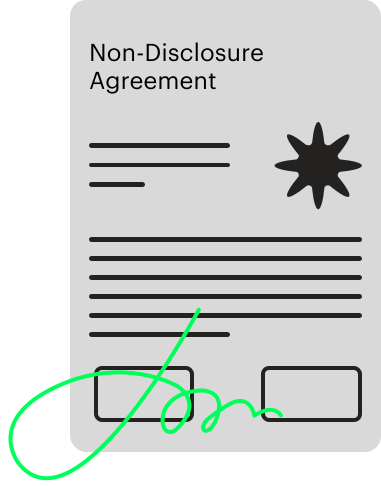
A one-page NDA keeps the confidentiality core every non-disclosure agreement needs: who the parties are, what counts as confidential information, what the receiving side may do with it (the permitted use), how long the duty lasts (the term), and signatures.
What it drops are the optional clauses a full agreement carries. This may include things like injunctive-relief language, governing-law and jurisdiction details, no-solicitation terms, and detailed return-or-destroy procedures. Those clauses matter for bigger deals. For a quick, low-stakes disclosure, they mostly add length.
If you want to see everything with a fuller version layers on top, compare a simple NDA template against the full NDA or start with what an NDA is if the basics are new. Just keep in mind that whether any NDA holds up depends on the facts and the jurisdiction.
When a one-page NDA is enough (and when it is not)
A one-page NDA tends to fit low-stakes, short-lived, single-direction disclosures. A fuller NDA fits the high-stakes end, including high-value IP, regulated data, or deals with several parties.
A simple NDA is the right tool when the disclosure is small and short. The moment the stakes refer to bigger value, regulated information, more parties — the optional clauses you dropped start to earn their place, and a fuller agreement becomes the safer fit.
What every simple NDA should include
A one-page NDA still needs these few things. Leave any of them out and the document gets shorter but stops doing its job. Here's each field, with a freelance design kickoff as the running example:
- The parties. Name the disclosing party (you, the design studio sharing the brief) and the receiving party (the freelance designer). Use legal names, not nicknames.
- What counts as confidential information. Define it plainly, e.g., "the campaign brief, brand assets, and unreleased product mockups shared for this project."
- Permitted use. State what the receiving side may do with it, e.g., "use the materials solely to deliver the agreed design work".
- Term. Set how long the duty lasts. A short engagement doesn't need a decade-long obligation.
- Return or destroy. Note what happens at the end, e.g., the designer returns or deletes the brief and mockups when the project wraps.
- Signatures. Both parties sign and date. Without signatures, it's a draft, not an agreement.
That's the whole anatomy. Everything beyond these six items is optional, which is exactly what keeps the document to a single page.
Mutual or unilateral — which simple NDA to pick
If only one side discloses confidential information, a one-way (unilateral) NDA is simpler and does the job. If both sides will exchange sensitive details, use a mutual NDA so the duty runs both ways.
Fill in your simple NDA in minutes
The embedded NDA generator builds the one-page document for you — no formatting, no clause hunting. You fill in the details, and CreateMyNDA produces the file.
- Pick one-way or mutual based on who's doing the sharing.
- Name the parties — the disclosing and receiving sides, with legal names.
- Define what's confidential and set the term — what's covered, and how long the duty lasts.
- Download your finished one-page NDA as a PDF or Word file, ready to sign.
You can customize any field before you download, so the template fits your specific disclosure rather than a generic one.
Adapting the simple NDA for complex situations
A template covers the standard case well. It stops being enough when the stakes rise, e.g. in high-value IP, regulated data, or a cross-border disclosure where more than one country's law could apply.
In those situations, you should consult a qualified attorney before you rely on the document, because enforceability depends on the facts and the jurisdiction. As for legal background, US federal law gives trade-secret owners a civil claim for misappropriation under the Defend Trade Secrets Act, but a one-page template isn't a substitute for advice on how that applies to you.

FAQ
At minimum: the parties (disclosing and receiving), a plain definition of confidential information, the permitted use, the term, a return-or-destroy line, and signatures. Those six items are the confidentiality core. Everything else a full NDA carries is optional, which is what keeps a simple version to a single page.
A simple NDA is a poor fit when the stakes are high. Core IP like source code or a patentable invention, regulated data such as health or financial records, and multi-party or M&A deals all tend to need the optional clauses a one-page version drops. In those cases, use a fuller agreement and have it reviewed.
Yes — for a standard, low-stakes disclosure, you can fill in a template like this one and send it without a lawyer. A generator handles the structure and language so you don't draft from scratch. For high-value or cross-border situations, it's worth having a qualified attorney review the document before you rely on it.
Pick based on who's sharing. If only one side discloses confidential information, a one-way (unilateral) NDA is simpler. If both sides will exchange sensitive details, use a mutual NDA so the obligation runs both ways. Neither is stronger. They just fit different situations.



Learn more about PandaDoc
PandaDoc is deal acceleration software that allows you to build, track, and eSign your docs all in one place. Automate your document workflow, discover what deals close faster with built-in analytics, and execute legally-binding eSignatures in minutes.